Category: Uncategorized
-
Размышление
I’m sure that the groups that I fall into change the way that I view the world. I am a white mormon male who lives on the west coast. I know that I have a lot of artifacts from that. As an American, especially as a christian American, I value growth and progression. Growing up in the west coast, I am surrounded by a culture that values positivity and optimism. Being a man, I believe that it is my duty to create a life and a character which will lend itself to helping and protecting others. In many ways I think Misha and I are similar.
Both Misha and I care about our families. Both of us care about God and make a conscious effort to bring ourselves closer to Him. Both of us believe that hard work is important, and both of us value connection, to the point that both of us had our grandparents living with our families for a part of our lives. We also both enjoy music and enjoy being lighthearted and having fun.
Maybe the most significant differences (if you could really call them that) is in how we view connection outside of the family and the motivation behind our work. It seemed to me that while Misha cared deeply about the relationships that he already had, and would work hard to sustain them, shallower relationships were less important to him. Maybe it’s not part of Russian culture, but its interesting how the language reflects this shift in connection. Russian the progression from Девушка to Знакома to Подруга to Девушка again reflects an increasing level of trust and knowledge. English has artifacts of this progression (ie we call someone we barely know an acquaintance and someone we know well a friend), but, especially in a college environment where most relationships tend to be shallow, the usage of acquaintance is rare and in my opinion offensive. I don’t know if I could call it a part of Russian culture, but I definitely recognize in Misha a value of real, genuine depth of connection, a foreign concept in the fast paced shallow social environment of college live.
Another way in which we might differ is the point of hard work. Misha is, and for as long as I’ve known him always has been, someone who works very hard. I think that I also work hard, but I think that my hard work is often self serving. I study hard because I want to get good grades. I make an effort to get an education because I think that a good education will give me a more comfortable life, a life where I have more freedom to do what I want. Misha’s hard work is of a different nature. He knows that education is important, but it seems like his motivation for working hard and filling his life with valuable pursuits has more to do with the inherent value of working hard rather than the personal benefit that he can gain from it. His hard work is done for the sake of working hard, a valuable trait that is a distant cousin from the American version of the same idea.
I am thoroughly americanized, and I think Russians and Ukrainians who move to the United States adopt the culture that they are transplanted into. Talking with my friend Misha was an interesting experience, our conversations were in Russian, talking about Ukrainian culture, but our conversations still felt very, very American. Despite this americanization of his culture, losing some of the edges as a result of a life mostly lived in the United States, I could recognize some of the Ukrainian values that still persist within him. Values like genuine connection and hard work.
I think that this project changed the way that I view eastern European culture. My hope with learning Russian is to gain a different understanding of the world that is in contrast with my own, and I think that recognizing the values of working hard and deep connection are rare. It also was fun talking with a friend in Russian, and I feel a lot better about having a conversation now compared to how I felt before the project.
-
Разговор №1
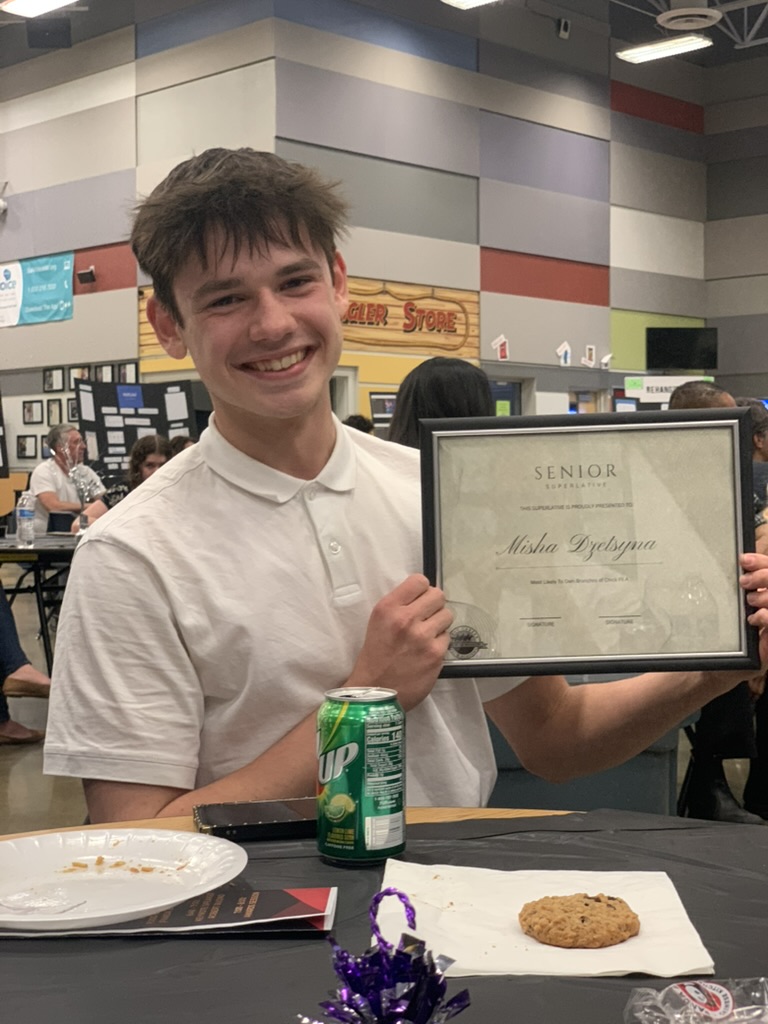
Я разговаривал с моим другом Миша. Он родился и вырос в Украине, в городе Луганск. Он и своей семей переехал в США когда ему было 11 лет, скоро после Россия начал войну напротив Украины. Они поехали из Луганск на последнем поезде в Киев. В Луганске, говорят по-русски, а в Киев говорят по-украински, поэтому ему нужно было учиться разговаривать по-украински. За этого, ему было трудно учиться от четвёртого до пятого класса. Через несколько месяцев они опять переехали, а в этом раз в США.
Хотя Миша и своя семья выросли в Украине, когда они приехали в США, они все уже смогли говорить на английском. Он сказал, что английский язык простой и нетяжёлый язык, поэтому быстро умели говорить на английском. Его родители изучали и занимались как использовать английский язык от первого до двенадцатого класса. Когда они пришли в США им только было изучать сланг.
Мы тоже немного разговаривали о семье Миши, которая ещё живёт в Украине. Они редко встречаются потому, что у них сложные отношения. Кажется что они с родителями Миши поссорились когда они все жили в Украине. Теперь они живут далеко друг от друга, и Миша их не видел уже давно. Недавно после семья Миши переехали в США, бабушки и дедушки тоже сюда переехали.
Мне удивился, что они думали что английский язык, это лёгкий язык. Здесь в США мы тоже изучаем иностранные языки в школе. Но за какого-нибудь, нам трудно говорить на испанском как Украинце говорят на английском. Может быть что знать говорить на английском важнее, чем говорить на испанском, так что студенты больше стараются учить английский язык. Тоже может быть что у них лучше преподаватели языков.
-
Разговор №3
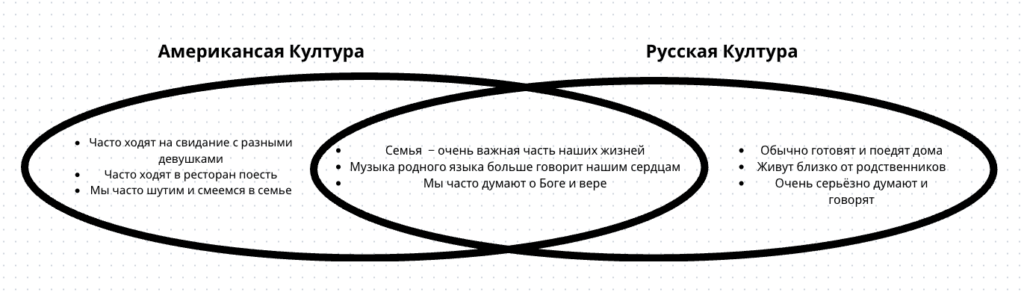
Это был мой последний разговор с Мишей. Я хотел узнать немного больше о том, что он с семей едят, так что, сначала мы поговорили о его любимых блудах. Он сказал что 50 процентов времени они едят украинскую еду, но они редко ходят в украинские рестораны. Отец Миши очень хорошо готовит борщ, и по мнению Миши, это самая хорошая борщ в мире. Миша тоже обожает пельмени (так должен), и почему-то никогда не попробовал холодец, хотя его бабушка ужа ему пригласил много раза попробовать. Один раз, мать Миши его приготовила тыквенную кашу, и с этого дня он ненавидит её.

Вообще мне было интересно, что они часто есть украинскую еду, но редко ходят в ресторан. Наверно, если бы мой отец тоже хорошо готовил борщ, то я так и делал бы. Я тоже удивился что Миша никогда не попробовал холодец, как можно!? Я очень хочу попробовал, всё равно, что все говорят что холодец очень отвратительный.
После этого я ему спросил, если он часто ходить на свидание с кем-нибудь, но он не понимал мои вопросы. На русском, девушка, это и молодая женщина которая вы ещё не знакомил, и кто-то с которым вы могли бы жениться. Так что, когда я спросил «Вы ходите на свидание с какой-то девушкой» было совсем непонятно.
В последней части нашего разговора, я спросил ему, есть ли у него планы после университета (он скоро окончит университет). Он мне сказал, что ему не нравилась своя специальность, и за этого он не используется знанием после университета. С средней школи он работает в Чик-Фил-А, и в месте то, что он меняет службу, он продолжит работать там.
Это тоже мне было интересно, почему так долго работать чтобы получить диплом, если не его используется?
-
Разговор №2
В этом интервью, мы быстро говорили. Он сказал, что теперь он очень занят. Каждый день он ходит в школу, а потом на работу, и в конце в спортзал. По выходным он всегда ходит в церковь. В начале, он мне рассказал о убеждениях свой семьи. Когда они делают какую-то большую поездку, например если они ездят в штат Вашингтон, они садятся вмести дома. И они так делают для своего здоровья. Они верят, что долго садиться в машине опасный, поэтому они отдыхают перед поездкой, чтобы не умереть.
Семья моего друга часто путешествует, но он редко ходит с ними. Его мама обожает путешествовать, и хотя Миша редко может пойти с ними, она всегда его приглашает. Обычно она ходит с братом Миши, и когда у Миши мало работы и учёбы, он тоже ездит с ними.
Я тоже хотел говорить о музыке, одежде и фильмы с Мишей, но он сказал, что его русские друзья одеваются так как американцы и что он мало смотреть русские фильмы. Даже его родители одеваются в такую же одежду, как нас. Он тоже почему-то перестал слушать русскую музыку. Хотя эта музыка «говорить с его душем», он только слушает русскую музыку когда его родители громко её играют.
Мне было интересно что он с семьей садятся вместе перед дальным поездкой. Это другой, но другие люди думают по-другому. Такая традиция мне показалась любопытной потому что, он редко путешествует. Почему-то, свои родители много путешествуют, а он не так часто хочет путешествовать. Я удивился что он теперь не очень часто слушает русскую музыку. Мне очень нравится слушать музыку на других языках, но мне больше всего нравится музыка на моём родном языке.
-
TVPI and Secondary Market Asymmetries
$latex TVPI=\frac{(\text{Distributions}+\text{Residual Value})}{\text{Paid In Capital}} $
Often, returns for an LP investor are measured using the above formula, Total Value to Paid In Capital, its an expression of the ratio of the Net Asset Value of a fund to the cost of the LPs investment. Essentially, it expresses how much each invested LP dollar is returning. Distributions are the liquid assets returned to LPs, Residual Value is the value remaining in illiquid assets that the fund holds, and Paid In Capital is the money invested by the LP
Where this formula gets interesting is at the end of the fund life. Typically TVPI tends to decline as funds reach year 8 or 9, so, in order to preserve their capital, it’s in the best interests of a LP to sell their investment. Let’s say hypothetically the LP invested $100 in a fund, has received $80, and the GP claims that there is $50 in residual value.
[latex]\begin{aligned}
\text{Distributions} = \$80 \
\text{Residual Value} =\$50 \
\text{Paid In Capital} = \text{\$100} \
\end{aligned}[/latex]Right now the TVPI of this investment would be 1.3x, or in other words, for every $1 invested, $1.30 in total value exists.
[latex]\text{TVPI} = \frac{80+50}{100} = 1.3[/latex]
And because our hypothetical fund is in its 8th year, this LP realizes that over time this TVPI metric will decline, they decide that it’s in their best interest to sell their stake in the fund. A secondaries investor offers to buy their stake at 30% discount to the GP’s estimated residual NAV, or in other words, they offer $35 for the LPs stake.
[latex]\text{LP Proceeds} = \$80\ + \$35\ =\ \$115[/latex]
In exchange for liquidity and short term returns, the LP takes a haircut on their already pretty low returns. While the secondaries investor already enters with a relatively high hypothetical TVPI of 1.6x.
[latex]\text{Secondary TVPI} = \frac{50}{30}=1.66
Even if the fund continues to “underperform” and the assets sell for 80% of the residual NAV predicted by the GP in 3 years, the Secondary investor will still exit with a 1.33x ROIC and a IRR of around 15%. The best part is that the LP doesn’t even underperform that much by exiting early. Selling at year 8 yields an IRR of 2.45%, while waiting to receive the distributions yielded to the secondary buyer through the sale, yields an IRR that is only marginally higher at 2.99%. Both IRRs are abysmal for Private Equity, so they are much better off getting liquidity and redeploying the capital.