Author: Evan Fife

  • Разговор №2

    В этом интервью, мы быстро говорили. Он сказал, что теперь он очень занят. Каждый день он ходит в школу, а потом на работу, и в конце в спортзал. По выходным он всегда ходит в церковь. В начале, он мне рассказал о убеждениях свой семьи. Когда они делают какую-то большую поездку, например если они ездят в штат Вашингтон, они садятся вмести дома. И они так делают для своего здоровья. Они верят, что долго садиться в машине опасный, поэтому они отдыхают перед поездкой, чтобы не умереть.

    Семья моего друга часто путешествует, но он редко ходит с ними. Его мама обожает путешествовать, и хотя Миша редко может пойти с ними, она всегда его приглашает. Обычно она ходит с братом Миши, и когда у Миши мало работы и учёбы, он тоже ездит с ними.

    Я тоже хотел говорить о музыке, одежде и фильмы с Мишей, но он сказал, что его русские друзья одеваются так как американцы и что он мало смотреть русские фильмы. Даже его родители одеваются в такую же одежду, как нас. Он тоже почему-то перестал слушать русскую музыку. Хотя эта музыка «говорить с его душем», он только слушает русскую музыку когда его родители громко её играют.

    Мне было интересно что он с семьей садятся вместе перед дальным поездкой. Это другой, но другие люди думают по-другому. Такая традиция мне показалась любопытной потому что, он редко путешествует. Почему-то, свои родители много путешествуют, а он не так часто хочет путешествовать. Я удивился что он теперь не очень часто слушает русскую музыку. Мне очень нравится слушать музыку на других языках, но мне больше всего нравится музыка на моём родном языке.
  • Does Freedom = Choice?

    The Explosion of Choice – AEON

    It’s not just that we don’t always know our minds. It’s that choice in its current incarnation isn’t, in fact, always freeing… In the past, for example, freedom has sometimes been imagined as a release from oppression or as an act of pure imagination, alternative visions we might want to bring back into circulation. As it turns out, choice doesn’t always produce freedom, and freedom itself often looks very different.

    Trying to maximize everything is futile. Choice doesn’t always equate to freedom.

  • What if Lincoln Had a Smartphone

    What if Lincoln Had a Smartphone – Cal Newport

    Cal Newport is one of my favorite thinkers on distraction and living a deep life. This is his most recent blog post about how distraction has been a constant force for a while now.

  • The Chance to Be Lonely

    A short video where a French girl talks about the opportunity to be lonely.

  • Uncertainty

    Learning Not To Know – AEON

    Pretty interesting article on how adopting a humble and uncertain position can build trust and allow for a solution to be found or for peace while uncertainty abounds.

  • Reading and Leadership

    Great interview with Admiral James Stavridis, where they talk about his path, his connection to reading, and what he learned from Ernest Hemmingway’s The Old Man and the Sea.

    Lots of good topics on things like leadership, grit, purpose, and the value of giving yourself to something

  • Over-Reliance on AI For Business Strategy

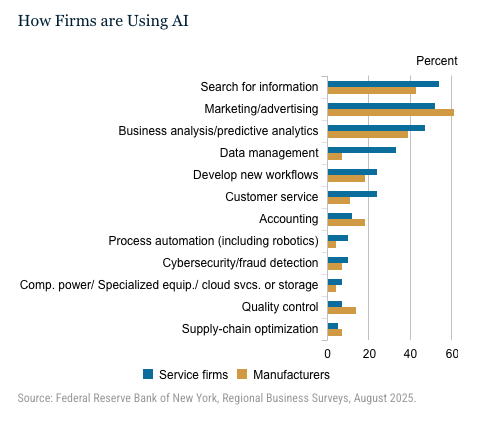
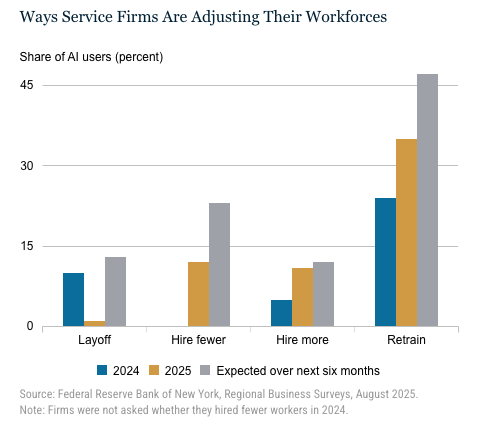
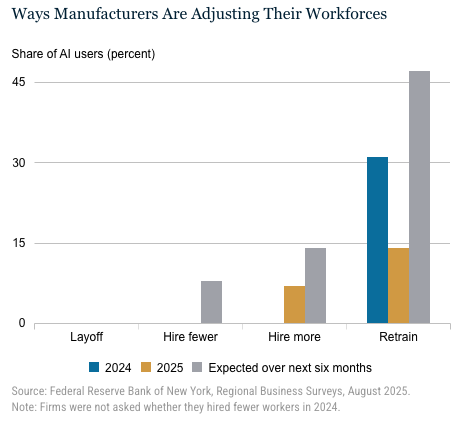
    Are Businesses Scaling Back Hiring Due to AI? – Liberty Street Economics

    The answer is not really, but AI usage is up among firms. As knowledge about the usage cases for AI improve, I think it’s likely that the areas that AI excels in will be disproportionately impacted. It’s interesting to see that most firms are expecting to retain workers and retain them

    The biggest implication of how firms are using AI in my opinion is in the softer and harder to quantify areas of marketing and business analytics. The effectiveness of AI is subjective to the inputs that are given to it. And while AI certainly can assist those working in both fields, in my opinion the embodied human experience (with all its biases and heuristics) is a better medium with which to make these incredibly complex decisions.

  • David Hume and the Split Between Literature and Philosophy

    How David Hume Split Literature from Philosophy – AEON

    An interesting take on the split between the types of philosophical inquiries. I think often we overlook the value of literature and stories in teaching us, possibly because the authors of the media we consume are unconcerned with teaching or illustrating a specific point and more with entertaining. Literature can be a great source for teaching us how to live, even if we need the more analytical and general philosophy to reach our first principles.

    Speaking of first principles, I think the same goes for learning how to be excellent in whatever field your in. You need general principles, but the principles don’t mean anything until you can translate them into action. For myself, as I’ve connected general principles I’ve learned with the stories of people I know or have read about, they become real, and I learn how to implement them in my own life.

  • Crossing to Safety

    By Wallace Stegner

    Crossing to Safety on Amazon

    Crossing to safety is a book about greatness, chaos, and the fibers that bind people together. It follows the relationship between two couples, Larry and Sally Morgan and Sid and Charity Lang, and the quiet but deep relationship that they develop over decades of friendship. It is a book about what makes life worth living, especially within the bonds of marriage and friendship, and what makes life hard.
    Crossing to Safety impressed me with its juxtaposition of the desire for order and the chaos that consumes life. The two couples started off hopeful for a life filled with meaning, but economic and health setbacks make their goals difficult to attain. Despite this, the lack of order didn’t damage the relationships, if anything, they simply exaggerated the characteristics that were present before. Love, compassion, and industry grew alongside contempt, friction, and control.

    xviii

    Largeness is a lifelong matter, you grow because you are not content not to. You are like a beaver that chews constantly because if it doesn’t, its teeth grow long and lock. You grow because you are a grower; you’re large because you can’t stand to be small.

    pp. 191

    Order is indeed the dream of man, but chaos, which is only another word for dumb, blind, witless chance, is still the law of nature.

    You can plan all you want to. You can lie in your morning bed and fill whole notebooks with schemes and intentions. But within a single afternoon, wikthin hours or minutes, everything you plan and everything you have fought to make yourself can be undone as a slug is undone when salt is poured on him. And right up to the moment when you find yourself dissolving into foam you can still believe you are doing fine.

    pp. 98

    Ambition is a path, not a destination, and it is essentially the same path for everybody. No matter what the goal is, the path leads through Pilgrim’s Progress regions of motivation, hard work, persistence, stubbornness, and resilience under disappointment. Unconsidered, merely indulged, ambition becomes a vice; it can turn a man into a machine that knows nothing but how to run. Considered, it can be something else – pathway to the stars maybe.

    I suspect that what makes hedonists so angry when they think about overachievers is that overachievers, without drugs or orgies, have more fun.

    pp. 207

    “Is it compulsory to be one of the immortals?” I said. “We’re all decent godless people, Hallie. Let’s not be too hard on each other if we don’t set the world afire. There’s already been enough of that.”

    pp. 239

    “… Youth hasn’t got anything to do with chronological age. It’s times of hope and happiness.”

  • Our Brains are Lazy

    While incredibly powerful, we only have so much energy to expand. A study done by Baumeister showed that when faced with tasks that are ego-depleting, people have a lesser ability to resist temptation or persist in difficult tasks.

    This phenomenon shows up everywhere. When doing something difficult, we can feel our attention pulled towards other things that are easier in the short term. When working on a tough essay or problem, we feel the desire to escape from the effort and check our phones or email as our brain tries to find an easier way to do tough things. The same thing happens when we are thinking through things. Despite our knowledge and intelligence, our brain wants to find a way that causes the least amount of ego depletion, so instead of thinking through first principles, we are pulled towards the answer that seems the easiest, convincing ourselves that the reasoning is sound to avoid deeper thought.